Welcome!

Dear Book Lovers, Welcome! I am delighted that you have found The Through the Looking Glass blog. For over twenty years I reviewed children's literature titles for my online journal, which came out six times a year. Every book review written for that publication can be found on the Through the Looking Glass website (the link is below). I am now moving in a different direction, though the columns that I write are still book-centric. Instead of writing reviews, I'm offering you columns on topics that have been inspired by wonderful books that I have read. I tell you about the books in question, and describe how they have have impacted me. This may sound peculiar to some of you, but the books that I tend to choose are ones that resonate with me on some level. Therefore, when I read the last page and close the covers, I am not quite the same person that I was when first I started reading the book. The shift in my perspective might be miniscule, but it is still there. The books I am looking are both about adult and children's titles. Some of the children's titles will appeal to adults, while others will not. Some of the adult titles will appeal to younger readers, particularly those who are eager to expand their horizons.

Friday, March 11, 2022

Women's History Month - The Story of Marianne North

Oil painting of Mount Fujiyama framed by wisteria by Marianne North

Marianne North was an extraordinary woman of means who taught herself how to paint, funded her own expeditions to the far corners of the world to find her subjects, and wrote a biography or two recounting her adventures.
   The eldest child of Frederick North, Member of Parliament for Hastings, Marianne had shown an interest in painting and writing, proper 'accomplishments' for a young Victorian lady, suitable hobbies for the daughter of an established family, but never a thought to making a career of such things.
For the sake of both business and recreation Frederick North travelled throughout Europe and the Middle East, and Marianne would often accompany him. During these happy years she learned to improve her skills as an artist, being taught first by a Dutch artist, Miss van Fowinkel, and later by Valentine Bartholomew, one of Queen Victoria's flower painters. She met Sir William Hooker who presented her with specimens to sketch while visiting Kew and refining her skills as an artist.
With the death of her father in 1870, Marianne found herself adrift and wanting focus. Having never married she had retained much of her father's modest fortune, and now sought to use it in her pursuit - painting flowers in their natural settings.
   Her first journey alone was in 1871, she travelled via Jamaica to the United States and Canada. She carried with her suitable letters of introduction, so initially it would seem that her travels were properly accommodated, and this was indeed the case for the most part. Later, however, she found herself trudging through wilderness, scaling cliffs and enduring swarms of insects in the pursuit of her subjects. In the situation necessitated 'roughing it' in tents or sleeping on the ground, she did.
   Her second solo journey took her to the jungles of Brazil, where she stayed for 8 months and completed over 100 paintings. Then in 1875 she travelled across America on her way to Japan, Sarawak, Java, and Ceylon and then back to England briefly. With barely enough time to unpack she was on her way again, this time to India. She remained in India for 15 months and produced a remarkable 200 paintings of mostly plants, but also of the local buildings she liked. Upon her return to London she exhibited her work at Conduit Street, where the positive reception and popularity of her work
encouraged her to display her collection at Kew Gardens, in London.
   In the summer of 1879 she wrote to Sir Joseph Hooker offering to donate her collected works, along with a building suitable to house them, to the garden, with the stipulation that the gallery serve as place for garden visitors rest. Her donation was graciously accepted and Kew gained one of it most enduring features - The Marianne North Gallery. Her friend, architectural historian James Fergusson, designed the building after the colonial structures she had admired in India, and when it was completed, she carefully arranged all her paintings in a dense mosaic on the walls, sorted according to geographical location of subject. She even embellished the gallery with a few of her own designs.
   But long before it was done, she was looking for another journey to undertake. It was at his suggestion of Charles Darwin , who had been a friend of her father's, that she chose her next great destination, Australia and New Zealand. While on an expedition through Australia she met with Marian Ellis Rowan, a talented young woman who would prove to be an accomplished natural history artist in her own right, and taught her how to paint with oils.
   She developed a rapid, vaguely impressionistic, style that allowed her to complete most of her paintings in a day or less. While some critics have seen this as a weakness in her work, others have found in it a vitality, an obvious joy in creation that is almost palpable when viewing her works. Her paintings are not typical of most botanical artists in that her colors are almost more vibrant than in life, and her images, although accurate and true to the subject, do not full illustrate all the plant's distinguishing features. However, she was no stranger to plant identification and taxonomy, being something of an amateur naturalist herself. She even found and painted a previously unknown genus of tree that would later be named in her honor - Northea seychellana. For other species would be named after her, including Nepenthes northiana - one of the giant pitcher plants from Borneo, Crinum northianum - an obscure Amarylis relative she discovered in Borneo, Areca northiana - a feather palm, and Kniphofia northiae - an aloe relative from South Africa, sometimes known as Red Hot Poker.
Butterflies' Road through Gongo Forest, Brazil by Marianne North
   The one continent missing from her travels, and therefore her gallery, was Africa, so in August 1882 she packed her bags and continued her mission. She travelled down to the Cape, and then up to the Seychelles, before returning home in 1883. Her health had been failing for some time, and by the time she made her expedition to Chile in 1884, despite rheumatism and increasing deafness, it had become evident to her that this would be her last great journey. She retired to Alderley, Gloucestershire, where she died on August 30th 1890.
   Her extensive journals were edited by her sister, Catherine North Symonds, and published in two volumes in 1892 as Recollections of a Happy Life: Being the Autobiography of Marianne North. London and New York; Macmillan, 1892) and proved so popular that a further volume was released the next year - Some Further Recollections of a Happy Life, Selected from the Journals of Marianne North, Chiefly Between the Years 1859 and 1869. (Edited by Catherine North Symonds. London and New York: Macmillan, 1893).

Wednesday, March 9, 2022

Women's History Month - The story of Libba Cotten

More than twenty years after the death of folk guitar legend Elizabeth Cotten, her music is still heard everywhere. Cotten, who began her public career at the age of 68, became a key figure in the folk revival of the 60's and a National Heritage Fellow. In 1985, at the age of 93, Cotten won a Grammy for Best Ethnic or Traditional Folk Recording for her album Elizabeth Cotten — Live! 

Laura Veirs
Illustrated by Tatyana Fazlalizadeh 
Nonfiction Picture Book
For ages 5 to 7
Chronicle Books, 2018, 978-1452148571
Libba Cotton has music running all the way through her. Everywhere she goes she hears music. Even the sound of the freight trains clattering down the tracks near her house is musical to her ears.
   Libba’s brother has a guitar, which she is not allowed to play. However, when he goes to work Libba sneaks into his room and plays the guitar, even though she has to play it “upside down” and “backwards” because she is left-handed. This is certainly a strange way to play a guitar, but Libba does not care. Somehow this unusual way of playing works for her and she is able to create music.
   After Libba’s brother leaves home, taking his guitar with him, Libba starts to save up to buy a guitar of her own. Earning seventy-five cents a month Libba saves and saves until she has enough to buy a Stella guitar. How Libba plays that guitar! It becomes an extension of her arm and she still plays it backwards and upside down because she is left-handed and the guitar was built for a right handed player. When she is only thirteen Libba writes her first song. It is called Freight Train.
   Then life gets busy and Libba stops playing the guitar because there are too many other things that need to be done. Libba never guesses that one day, when she is a grandmother, music will come back into her life and it will change her future in the most wonderful ways.
   In this beautifully written and very moving book, Laura Veirs, who is herself an accomplished guitar player, performer, and songwriter, tells the story of an extraordinary woman who was a self-taught and very gifted musician. Libba’s song Freight Train is known by musicians and music lovers all over the world, and it was a firm favorite in Laura’s childhood home.
   In addition to the main story, Laura provides her readers with further information about Libba at the back of the book in an author’s note. She also tells us how she became get interested in Libba’s remarkable story.


Tuesday, March 8, 2022

Happy International Women's Day

“Here’s to strong women: May we know them. May we be them. May we raise them.” 

International Women’s Day, a global celebration of the economic, political and social achievements of women, took place for the first time on March 8, 1911. Many countries around the world celebrate the holiday with demonstrations, educational initiatives and customs such as presenting women with gifts and flowers. 
   The United Nations has sponsored International Women’s Day since 1975. When adopting its resolution on the observance of International Women’s Day, the United Nations General Assembly cited the following reasons: “To recognize the fact that securing peace and social progress and the full enjoyment of human rights and fundamental freedoms require the active participation, equality and development of women; and to acknowledge the contribution of women to the strengthening of international peace and security.”
   The National Women’s History Alliance designates a yearly theme for Women's History Month. The 2022 theme is "Women Providing Healing, Promoting Hope." This theme is "both a tribute to the ceaseless work of caregivers and frontline workers during this ongoing pandemic and also a recognition of the thousands of ways that women of all cultures have provided both healing and hope throughout history."
 
You can find wonderful books that celebrate girls and women on the TTLG Strong Girls, Strong Women feature. 

Monday, March 7, 2022

Shirley Hughes, beloved children's book author and illustrator, has left the stage

Shirley Hughes at work
 

   When I was a little girl I had a set of chapter books that I adored. My aunt and father read them to me, and then I read them on my own. The first book was called My Naughty Little Sister and it was written by Dorothy Edwards and illustrated by Shirley Hughes. The main character, the little sister, is a little 
minx of the first order. She gets into scrape after scrape and is always in trouble. I adored her. When I heard the book mentioned I always saw the little girl as illustrated by Shirley Hughes. The little girl with the red hair who had a naughty gleam in her eye. Above you see her with her best friend, Bad Harry. When those two got together you knew you were in trouble.
   I then went on to read Dogger, a story about a little boy who loses his beloved stuffed animal, and the Alfie stories. Later, as an adult, I discovered many other books that Shirley Hughes both authored and illustrated. Every single one of her illustrated stories offer up a feeling of warmth and gentleness that is unique. 
   When I heard that she had died I had a little cry, and I thanked her for all the stories that she had given me and so many other people. I then got out two of her books that I had handy and began reading. Below is an article about this remarkable woman who hugely influenced my love of the written word. 

Pages from Dogger, one of Hughes' most beloved stories

Shirley Hughes, a British children’s author and illustrator who captivated generations of young readers with warm, tender books about everyday dramas and heartbreaks — digging for worms, stamping in puddles, discovering that a favorite toy has gone missing — died Feb. 25 at her home in London. She was 94.
   While other beloved children’s authors wrote about talking animals, magical spells or dreamlike adventures in distant lands, Ms. Hughes focused on all the real things children experienced, including pint-size dramas that adults sometimes seemed to miss. “They are learning more at this stage than at any other, grappling with these big things: Are my boots on the right feet? Can I safely put my security blanket down? You have to tap into the way they feel about these things,” she told the Times of London.
   Honored by Queen Elizabeth II as well as the British reading charity BookTrust, which gave her its inaugural lifetime achievement award in 2015, Ms. Hughes wrote more than 50 books that collectively sold over 11 million copies. She started out illustrating other people’s books before writing and drawing her own stories in the 1960s, while raising three children in the Notting Hill section of West London.
   Traveling across the city with a sketch pad, she recorded scenes that provided inspiration for her work. “I lurk about in parks and play areas with a sketchbook and observe what I see: the way small children move when they are playing, how they stand when they are rather unsure of themselves, or crouch down to examine something minutely, then take off like a flock of birds,” she told the Guardian in 2017. “Then I go home and make it all up.”
   While her themes were universal, her settings — Victorian terrace houses, birthday teas — were inescapably English. “Oh Shirley,” she recalled publishers telling her, “you are so middle class, so English, you will never sell abroad.”
Alfie gets locked in
   Yet Ms. Hughes acquired a wide readership with “Dogger” (1977), which she called “the most quintessentially English book you could imagine.” Set during a school sports day, the picture book told the story of a boy who loses his beloved toy dog: “One of his ears pointed upwards and the other flopped over. His fur was worn in places because he was quite old. He belonged to Dave.”
   Translated into more than a dozen languages, “Dogger” won the Kate Greenaway Medal, a top British honor for illustrated children’s books, and was voted the public’s favorite Greenaway winner of all time in 2007, for the 50th anniversary of the award. “Hughes has a kindly, inexhaustible eye — she misses nothing,” the Observer literary critic Kate Kellaway wrote in 2010, including “Dogger” on a list of the 10 best illustrated children’s books.
Alfie and his little sister

    Ms. Hughes had another hit with her Alfie series, which began with       “Alfie Gets in First” (1981), about a boy who accidentally locks himself   inside his house. Realizing that he can’t reach the latch to get out, Alfie    bursts into tears. With his mother and baby sister locked outside, the       rest of the neighborhood tries to help, including a milkman who offers to pick the lock and a window cleaner who brings his ladder to climb up to a bedroom window.
“ ‘Dogger’ and ‘Alfie’ are about the tiniest of incidents — down to the stress of putting your shoes on — but these things can be a source of real anxiety for a child,” children’s author Philip Pullman said in a 2009 interview with the Guardian. “And I think this is where she is actually better than [E.H.] Shepard,” who illustrated “The Wind in the Willows” and “Winnie-the-Pooh,” and who served as an inspiration for Ms. Hughes.
   While some of Shepard’s drawings could be “diabetes-inducingly sentimental,” Pullman continued, “you just don’t get that in Shirley. She is much clearer and sharper, and therefore provides a genuinely warmer version of childhood.”
   Ms. Hughes’s own upbringing was framed by World War II, a period that she described as one of
occasional fear but mainly intense boredom, in which she and her older sisters passed the time by drawing pictures and acting out plays, sometimes for their cats. She wrote about the war in several books for older children, including “The Lion and the Unicorn” (1998), about a boy who is evacuated to the English countryside during the Blitz, and “Hero on a Bicycle” (2012), her first novel, about a 13-year-old Italian boy during the Nazi occupation of Florence.
   But picture books remained her focus, even as she broadened her audience with books such as “Bye Bye Birdie” (2009), a wordless, expressionistic fable geared toward adult readers, about a dapper young man whose love interest transforms into a predatory bird.
   “It is a sad thing for adults and children alike if, once we have learned to read, the pictures in our books are sternly removed,” she wrote in a 2004 essay for the Guardian. “They not only add to the pleasure of turning a page, they are the connection through which readers acquire the amazing human attribute of being able to get pictures in the head. And these, of course, are the best illustrations we will ever see.”
   The youngest of three daughters, Shirley Hughes was born in the seaside town of West Kirby near Liverpool on July 16, 1927. Her father served in the Royal Flying Corps during World War I and founded the Liverpool department store T.J. Hughes. He died when Ms. Hughes was 5, in what newspaper reports at the time suggested was a suicide.
   Her mother “became very shy,” Ms. Hughes recalled, and often took her to the theater, helping to cultivate an interest in set design and costumes. At age 16, Ms. Hughes left school to study at the Liverpool School of Art, later attending the University of Oxford’s Ruskin School of Drawing and Fine Art, where an instructor encouraged her switch from theater to illustration.
   The two art forms were not entirely different, said Ms. Hughes, who compared the page to a stage set: “But this is a very intimate theater, which the audience can return to again and again. The characters you draw are like actors on a stage carrying the narrative along with gestures and facial expressions.”
 
 Moving to London, she launched her career as a freelance artist, illustrating Dorothy Edwards’s “My Naughty Little Sister” series as well as children’s books by Noel Streatfield. In 1960, she published her first picture book, “Lucy and Tom’s Day.” Later came books including “Out and About” (1988), a poetry collection for young readers, and “Ella’s Big Chance” (2003), a Jazz Age retelling of Cinderella — in this case a red-haired young woman named Ella Cinders — that earned Ms. Hughes her second Greenaway Medal.
   She also collaborated with her daughter, Clara Vulliamy, on the Dixie O’Day series, about the adventures of a dog who drives around the British countryside in a bright red car. After the death of her husband, architect John Vulliamy, in 2007, she said she started writing children’s novels to help fill the time.
   In addition to her daughter, survivors include two sons — Ed, an author and journalist, and Tom, a molecular biology professor — and a number of grandchildren.
   Ms. Hughes received an OBE, or officer of the Order of the British Empire, for services to children’s literature in 1999, and was named a Commander of the Order of the British Empire in 2017. She was still writing in recent years, publishing a sequel to “Dogger” at age 93 in 2020, and often extolled the pleasures of reading in interviews, encouraging parents to give their children time and space to slow down and pick up a book.
   “If there’s anything wrong with childhood today,” she told the Guardian in 2015, “[it’s] that there’s too much on offer and everything moves at great speed. What I want children to do is linger, turn the page, see themselves as readers long before they can read.”

Friday, March 4, 2022

Women's History Month - With a review of Mary Walker Wears the Pants


I still remember the first biography - written for youngsters - that I read. My parents bought it for me at the library sale, and it was the story of Florence Nightingale. The book had a plain, dark blue, linen cover and the only illustration in it was an etching of Florence on the frontispiece. The story completely transfixed me. First the first time I learned how hard it was for women in the 1800s to enter a profession, and how restricted their lives were. I remember feeling furious because I read that Florence's parents wanted her to be a 'good girl' and marry a suitable young man; they were appalled when she announced that she was going to become a nurse. I was appalled at their behavior and attitude and I still seethe every time I hear someone belittle a girl or a woman.

Today I bring you a biography of a women who, like Florence Nightingale, wanted to be a healer. Like Florence she pushed against the establishment that wanted to deprive her of that opportunity. The book was written by my dear friend Chery Harness. 


Mary Walker Wears the Pants: The True Story of the Doctor, Reformer, and Civil War Hero 
Cheryl Harness
Illustrated by Carlo Molinari 
Nonfiction Picture Book
For ages 6 to 9
Albert Whitman & Company, 2013, 978-0807549902
In the 1800s, tradition dictated that men wore pants and women wore long dresses, and under thesedresses there were layers of petticoats and tight corsets. At that time men alone were allowed to vote, women were not allowed to participate in politics of any kind, and as a result women had little to control over their own lives. They were also not allowed to becomes doctors, lawyers, bankers, or business owners; indeed the only jobs that they could take on was teaching, nursing, cleaning, and working in a factory.
   Then Mary Edwards Walker came along and she refused to accept these rules and societal restrictions. “Her parents taught her to think for herself,” and this is exactly what she did, even if it meant that people talked about her behind her back. She dared to become a doctor, one of the first women in America to do so, and she dared to wear pants because they were a lot more comfortable and sensible than those silly dresses.
   When the Civil War broke out, Mary went to Washington D.C to do all she could to help. Wounded men were pouring into the capital city, and there were not enough doctors to tend to them all. Though she was a trained doctor, she was not allowed to be a surgeon in the army. Instead, for a while, she did what she could to make the soldiers more comfortable working as a nurse. 
   This kind of nursing was something other determined women did, women like Clara Barton, and Louisa May Alcott. After a time, Mary decided that her skills were being wasted and even though she was not allowed to serve as an army surgeon, she went to the field hospitals and offered her help. The medical staff at these facilities were stretched so thin that Mary’s help was accepted. By some. Eventually, in 1863, she was allowed to become an assistant surgeon in the U.S. Army. Thrilled to finally be allowed to work as a proper doctor, Mary set off for the front lines. She never imagined then that all kinds of adventures, some of which were dangerous, lay in her future.   
   In this wonderful picture book biography readers will meet a woman who believed that everyone had the right to wear what they wished, think what they wished, and say what they wished. She wore pants in public to make it clear to everyone that she met that she would not be bound by accepted societal norms. 
   Cheryl Harness tells Mary’s story with evident admiration, spirit, and touches of humor, thus helping us to get to know a woman who was courageous and determined. 

Wednesday, March 2, 2022

A Mighty Girl

A Mighty Girl is a wonderful organization that supports and encourages girls to grow up to be strong women. They have a splendid listing of books about exceptional women on their website that I encourage you to visit. 

About A Mighty Girl:
"A Mighty Girl is the world’s largest collection of books, toys, movies, and music for parents, teachers, and others dedicated to raising smart, confident, and courageous girls and, of course, for girls themselves!

After years of seeking out empowering and inspirational books for our four young nieces, we decided to create A Mighty Girl as a resource site to help others equally interested in supporting and celebrating girls. The site was founded on the belief that all children should have the opportunity to read books, play with toys, listen to music, and watch movies that offer positive messages about girls and honor their diverse capabilities.

Girls do not have to be relegated to the role of sidekick or damsel in distress; they can be the leaders, the heroes, the champions that save the day, find the cure, and go on the adventure. It is our hope that these high-quality children’s products will help a new generation of girls to grow and pursue whatever dreams they choose -- to truly be Mighty Girls!"

Tuesday, March 1, 2022

March is Women's History Month


Women’s History Month is a celebration of women’s contributions to history, culture and society and has been observed annually in the month of March in the United States since 1987. Women’s History Month 2022 will take place from Tuesday, March 1-Thursday, March 31, 2022. 

The actual celebration of Women’s History Month grew out of a weeklong celebration of women’s contributions to culture, history and society organized by the school district of Sonoma, California, in 1978. Presentations were g
iven at dozens of schools, hundreds of students participated in a “Real Woman” essay contest and a parade was held in downtown Santa Rosa.

A few years later, the idea had caught on within communities, school districts and organizations across the country. In 1980, President Jimmy Carter issued the first presidential proclamation declaring the week of March 8 as National Women’s History Week. The U.S. Congress followed suit the next year, passing a resolution establishing a national celebration. Six years later, the National Women’s History Project successfully petitioned Congress to expand the event to the entire month of March.

The National Women’s History Alliance designates a yearly theme for Women's History Month. The 2022 theme is "Women Providing Healing, Promoting Hope." This theme is "both a tribute to the ceaseless work of caregivers and frontline workers during this ongoing pandemic and also a recognition of the thousands of ways that women of all cultures have provided both healing and hope throughout history."

As I do every March I will be reading and reviewing many new books for Women's History Month. For years I have been reading and reviewing books about exceptional women and you can view these on my feature, Strong Girls, Strong Women on the TTLG website. 

There are wonderful listings for books about remarkable women all over the web. Here are a few sites that you might like to visit. Just click on the images above and below to visit the websites.

From the Imagination Soup website 


From the What Do We Do All Day website 


From the The Blog of Toledo Lucas County Public Library


Happy March!


"March was an unpredictable month, when it was never clear what might happen. Warm days raised hopes until ice and grey skies shut over the town again." 
- Tracy Chevalier


"It was one of those March days when the sun shines hot and the wind blows cold: when it is summer in the light, and winter in the shade." 
- Charles Dickens


"By March, the worst of the winter would be over. The snow would thaw, the rivers begin to run and the world would wake into itself again." 
-Neil Gaiman


Happy March to you all. Here in the Pacific Northwest we are desperately hoping that this month, and our spring, will be wet. We have barely had any rain for more than a month and everything is dry as dry. So, although I like to see Pooh taking his pleasant amble under a blue sky as the countryside starts turning green again, I rather prefer seeing Christopher Robin measuring the level of rainwater and rain pours down and taps on his nice, large, black umbrella. 


Wednesday, February 23, 2022

Black History Month - Celebrating African-American Inventors

Clockwise from top left: Benjamin Banneker, Madame C.J. Walker, George Washington Carver,
Dr. Shirley Jackson, and  Dr. Daniel Hale Williams.

There are so many things that we take for granted. We eat our potato chips, drive safely on roads thanks to traffic lights, eat food that has been transported long distances in refrigerated trucks, travel in elevators, and turn on our home security systems without once thinking about the men and women who thought up these inventions. Every single one of these innovations came into the world because of the genius of an African American inventor. Indeed, so many of the things that we use every day were invented by African American inventors whom we have never even heard of. 

There are a few books on the subject that you might looking at:

African American Inventors by Otha Richard Sullivan


Monday, February 21, 2022

Black History Month - The story of a brilliant African American inventor


One of the things I love about reviewing nonfiction children's literature is that I learn a lot. When I started reviewing titles for Black History Month I got to 'meet' so many wonderful men and women of African descent who stories are inspiring. I saw how many of these stories never ended up in history books, and I like to do my part to set the record straight in my own small way. African Americans, and other people of African descent around the world, have made enormous contributions to society, and we need to learn about their achievements about the honor them. 

Today you are going to meet an African American inventor who created many useful things in his productive life. One of these inventions, in particular, saved lives. 

To the Rescue: Garrett Morgan Underground 
Monica Kulling
Illustrated by David Parkins
Non-Fiction Picture Book
For ages 5 to 7
Tundra Books, 2017, 978-1-101-91882-1
Garrett Morgan was the seventh child of former slaves who lived in Kentucky and worked as sharecroppers. It was a hard life, and when it was time for Garrett to leave school so that he could get a job, the fourteen year old decided to travel north to Cleveland, Ohio, to see if he could find a job that was less unremitting. 
   Garrett started out sweeping floors in a clothing factory but he did not keep that job for long. When he noticed that the sewing machine belts were always breaking he invented a belt that was stronger, and thus he earned him his employer’s gratitude and a new job as a sewing machine repairman. 
   This new job served Garrett well and by the time he was twenty-one he owned his own sewing machine shop, and a house. He and his wife, Mary Anne, then opened a tailoring shop as well. 
  Garrett had a gift for inventing. Quite by accident he created a hair product that straightened curly hair. This invention led to him creating a new business, the G.A. Morgan Hair Refining Company. The success of his cream and other hair products gave Garrett the financial freedom to spend more of his time inventing.
   When Garrett saw a need he set about trying to create a product that would take care of that need. He saw that firefighters required some kind of device that would help them rescue people from smoke-filled buildings, and so he invented the Safety Hood and Smoke Protector. 
   Though his invention worked well, Garrett could not get the local fire departments interested in the hood, because Garrett was African-American. Then a disaster struck the city which changed Garrett’s life forever.
   All too often black inventors and innovators are not given credit for their creations. In this book Monica Kulling tells the story of an inventor whose inventions literally saved lives. Her engaging writing brings Garrett Morgan to life for young readers, and David Parkins’ ink and watercolor illustrations takes children back to a time when everyday life was a lot more dangerous than it is now.

Thursday, February 17, 2022

The Bookish Calendar for March - Books for March birthdays, holidays, and special days


Dear Bookish Friends,

Here is the Bookish Calendar for March. I'm bringing it to you today so that you have plenty of time to plan for days that interest you and the children in your lives. Many of the birthdays and special days on the calendar link to review pages for books that are associated with those birthdays and special days. For example, March third is the birthday of Alexander Graham Bell, and I have reviewed several books about this remarkable inventor. If you click his name on the March Bookish Calendar you will be taken to the page where these reviews can be found. 

March is National Craft Month (USA)
March 3rd is World Wildlife Day You can find many books suitable for this day here.
March 3rd is World Book Day (UK and Ireland)
Match 20th is the Spring Equinox
March 21st is World Poetry Day
March 22nd is World Water Day
March 23 is National Puppy Day (USA)
March 26th is Make up your own holiday day (USA)
March 27th is World Theatre Day
March 28th Earth Hour

Wednesday, February 16, 2022

Book Hoarding? What's that?


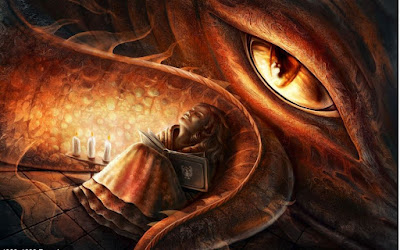
Dragon: Do humans hoard things? 

Human: Sometimes, I guess. Do you have a big pile of treasure somewhere? 

Dragon: Absolutely not! Those gold hoarding dragons really give us a bad name! 

Human: So what do you hoard? 

Dragon: Books, of course

Human: But you're a fire dragon. 

Dragon: I know! I find these poor abandoned books, but I can't even read them because I'll burn them

The human runs off and grabs an armful of books, before coming back to sit by the dragon.

Human: "Chapter One. The Mole had been working hard all the morning, spring-cleaning his little home. First with brooms, then on ladders and steps and chairs, with a brush and a pail of whitewash; till he had dust in his throat and splashes of whitewash over his black fur, and an aching back and weary arms. Spring was moving in the air above, below, and around him, penetrating even his dark and lowly little house with its spirit of divine discontent and longing.”


Tuesday, February 15, 2022

Newsletters from Groundwood Books for Educators, Librarians, and Parents


My friends at Groundwood Books, a marvelous publishing house based in Canada, have a new program that I'd like to tell you about. The Groundwood Newsletters are designed to provide educators, librarians, and parents with strategies, tips and information to accompany fiction and non-fiction Groundwood books. 

Each newsletter is centered on a single topic, theme or genre with a list of recommended titles that will encourage young readers to explore and engage with the theme. The series will include lots of great resources such as reading, writing, arts and media responses; a spotlight feature on a Groundwood author/illustrator; a curated book list with brief annotations; and additional links to the Groundwood website for more book information and/or teacher guides. They are written specifically for teachers by a well-known academic and children’s lit specialist.  The series of five newsletters will be distributed once a month but late subscribers will have access to any of the newsletters already delivered.

The theme for the January Newsletter was Exploring Acceptance, Belonging, and Community through Picture BooksThe Groundwood picture book titles featured in the newsletter focused on such matters as race and ethnicity, gender identity, the immigrant experience and bullying. When listening to these
books being read aloud, or when reading these books independently, students can be inspired to
confront intolerance and foster a sense of inclusion. In this way, the titles encourage students to
think about acceptance, belonging and community. 

You can sign up for the newsletters HERE
 

The 2021 Caldecott Award Winning Picture Book - Watercress


When I was six years old my parents and I, along with my aunt, some friends, and our pets, left the only home I had ever known. A civil war had been raging in the country where I was born and we had no choice but to leave. We left behind our house, most of what we owned, many of our friends, and the graves of loved ones who had been killed in the conflict. Even now, all these years later, the clouds of my refugee and immigrant memories still drift across my sky once in a while. 

The book I am reviewing today won the prestigious Caldecott Award on January the twenty-fourth of this year. It is a powerful and beautifully illustrated story about a child whose parents had to leave their homeland when their lives there became unbearable. She feels no connection with her parents' homeland, and she does not know their story until the day when the past reaches into the present. 

Watercress
Andrea Wang
Illustrated by Jason Chin
Picture Book
For ages 5 and up
Holiday House, 2021, 978-0823446247
One day an old, faded car containing a girl and her family is driving down a dirt road that is lined with rows of corn. Between the edge of the road and the corn fields there is a ditch full of water. The mother has “eyes as sharp as the tip of a dragon’s claw,” and she sees something in the ditch. She calls out and her husband slams on the brakes. 
   Wild watercress is growing in the ditch and soon the girl, her brother, and their parents are in the ditch. With rolled up trousers and bare feet they walk through the cold water, mud squishing between their toes, cutting the watercress. When a car drives by the girl hides her face, ashamed of what they are doing. American people would never gather watercress in a ditch, but the girl’s parents were born in China, and for them being able to collect watercress to eat connects them to their homeland and their past.
   Back at home the girl refuses to eat the watercress that her mother serves with dinner. As far as she is concerned eating free food is just as shameful as wearing hand-me-down clothes, and taking furniture that other people have thrown away on the side of the road. 
   Then the girl’s mother brings out a photograph to show her daughter. It is portrait of the mother with her parents and her little brother. She begins to tell the story of her family, a story that is threaded with pained and loss.
   All over there world people leave their homelands to start new lives elsewhere, driven away by war, famine, persecution, or a natural disaster. This story is based on an event that took place in the author’s life. When she was a child her Chinese immigrant parents collected watercress from a roadside ditch, and their behavior only reinforced for her that she was different. Being different can be hard for children, and they often fervently wish that they could be like everyone else and fit in.
   With great sensitivity and gentle touches of emotion, the author tells a story that is dear to her heart. It is a story that will resonate with anyone who has felt as if they don’t belong, and it is also a tender tribute to all those families who have had to start over in a new place or foreign land. 
   Jason Chin’s art perfectly complements Andrea’s lyrical text. His watercolors bring together the traditions of western and Chinese art, beautifully connecting the past with the present. 


Friday, February 11, 2022

The new television series of Around the World in Eighty Days

 This February the BBC and Masterpiece released a new television series that is loosely based on the story in Jules Verne's Around the World in Eighty Days. The story has been changed a fair bit, but I have to say that it is very entertaining, and is beautifully made. I am enjoying the series a great deal, accepting that this is an adaptation of Jules Verne's tale. If you are a purist and only watch films that are faithful to the books that inspired them, then this series will probably not suit you. 

Thursday, February 10, 2022

Did anyone try to go around the world in eighty days?


In Jules Vern's book, Around the World in Eighty Days, the heroes in the story are men. The book was first published in French in 1872, and at this time adventure stories did not have female heroes; it simply wasn't done. 

The story caused quite a stir, and I would have thought that many gentleman adventurers would have tried to duplicate the journey taken in the book. I cannot find a record anywhere of a single man doing so. Not a one. Really, did none of the gentleman adventurers of the time read books? Did none of them have even a soupcon of imagination or derring-do? 

Apparently not. It wasn't until 1889 when someone took on the challenge. A woman called Nellie Bly undertook to travel around the world in eighty days for her newspaper, the New York World. She managed to do the journey within seventy-two days, and she met Jules Verne in Amiens in France. Her book Around the World in Seventy-Two Days became a best seller. Who was this remarkable woman?

Nellie Bly was born Elizabeth Jane Cochran on May 5, 1864. Her family owned a lucrative mill in
Cochran, Pennsylvania. At the age of six, Bly lost her father. Unable to maintain the land or their house, the family moved. Her mother also remarried but later divorced due to abuse. While attending Indiana Teacher’s College, Elizabeth added an “e” to her last name becoming Elizabeth Jane Cochrane. Due to the family’s financial crisis she was unable to finish her education. No longer in school, Bly focused on helping her mother run a boardinghouse. One day an upset Bly decided to pen an open letter to the editor of the Pittsburgh Dispatch. Her short but important piece pointed out the paper’s negative representation of women. The editor not only read Bly’s response, he printed her rebuttal, and offered Bly a job as columnist. As a newspaper writer, she took the pen name Nellie Bly. Although Bly was a popular columnist, she was often asked to write pieces that only addressed women.

Wanting to write pieces that addressed both men and women, Bly began looking for a paper that would allow her to write more serious work. In 1886, she moved to New York City. As a woman, Bly found it extremely hard for her to find work. In 1887, Nellie Bly stormed into the office of the New York World, one of the leading newspapers in the country. She expressed interest in writing a story on the immigrant experience in the United States. Although, the editor declined her story, he challenged Bly to investigate one of New York’s most notorious mental hospitals. Bly not only accepted the challenge, she decided to feign mental illness to gain admission and expose how patients were treated. With this courageous and bold act Bly cemented her legacy as one of the foremost female journalists in history. 

Nellie wearing her travel outfit. 
After pretending to be mentally ill for ten days, the New York World published Bly’s articles about her time in the insane asylum on Blackwell’s Island in a six-part series. Ten Days in a Mad-House quickly made Bly one of the most famous journalists in the United States. Furthermore, her hands-on approach to stories developed into a practice now called investigative journalism. Bly’s successful career reached new heights when she decided to travel around the world after reading the popular book Around the World in 80 Days. Her trip only took seventy-two days, which was a world record. Bly would only hold it for a few months.

In 1895, Bly married millionaire Robert Seamen and retired from journalism. Bly’s husband died in 1903 leaving her in control of a massive manufacturing company. In business, her curiosity and independent spirit flourished. Bly went on to patent several inventions related to oil manufacturing, many of which are still used today. In her later years Bly returned to journalism, covering the woman suffrage movement and World War I. While still working as a writer Bly died from pneumonia on January 27, 1922.

I have reviewed several books for young readers about Nellie Bly, which you can find in the TTLG library. 

Wednesday, February 9, 2022

A BBC Radio Theatre Production of Around the World in Eighty Days


When I was growing up my parents used to listen to the BBC World Service throughout the day. They were journalists and at that time the BBC provided the most up to date news from around the world. I grew heartily sick of the introduction music for the news programs, and heartily sick of listening to the news every five minutes, or so it seemed to me. Being the child of not one but two journalists had its disadvantages. 

In addition to the news, the BBC had many other programs, and one of the things I enjoyed the most were their radio theater productions. These programs were more than just audiobooks; the story was told using multiple voice actors, background sounds, and music. I listened to many stories this way, including A Hitchhikers Guide to the Galaxy, Wind in the Willows, and Around the World in Eighty Days. You can still find these recordings online, and today I bring you the excellent BBC production of Around the World in Eighty Days. Please click on the image above to get to the recording. You can listen to the program on any device that can access YouTube. Enjoy!


Tuesday, February 8, 2022

Happy Birthday Jules Verne, the author of Around the world in Eighty Days.


Jules Verne was a 19th-century French author who is famed for such revolutionary science-fiction novels such as 'Around the World in Eighty Days' and 'Twenty Thousand Leagues Under the Sea.'
   Jules Verne hit his stride as a writer after meeting Pierre-Jules Hetzel, a publisher who nurtured many of the works that would comprise the author's Voyages Extraordinaires. Often referred to as the "Father of Science Fiction," Verne wrote books about a variety of innovations and technological advancements years before they were practical realities. Although he died in 1905, his works continued to be published well after his death, and he became the second most translated author in the world.
   Verne was born on February 8, 1828, in Nantes, France, a busy maritime port city. There, Verne was exposed to vessels departing and arriving, sparking his imagination for travel and adventure. While attending boarding school, he began to write short stories and poetry. Afterward, his father, a lawyer, sent his oldest son to Paris to study law.
   While he tended to his studies, Verne found himself attracted to literature and the theater. He began frequenting Paris' famed literary salons, and befriended a group of artists and writers that included Alexandre Dumas and his son. After earning his law degree in 1849, Verne remained in Paris to indulge his artistic leanings. 
   Verne continued to write despite pressure from his father to resume his law career, and the tension came to a head in 1852, when Verne refused his father's offer to open a law practice in Nantes. The aspiring writer instead took a meager-paying job as secretary of the Théâtre-Lyrique.
   In 1856, Verne met and fell in love with Honorine de Viane, a young widow with two daughters. They married in 1857, and, realizing he needed a stronger financial foundation, Verne began working as a stockbroker. However, he refused to abandon his writing career, and that year he also published his first book, The 1857 Salon.
   In 1859, Verne and his wife embarked on the first of approximately 20 trips to the British Isles. The journey made a strong impression on Verne, inspiring him to pen Backwards to Britain, although the novel wouldn't be published until well after his death. In 1861, the couple's only child, Michel Jean Pierre Verne, was born.
   Verne's literary career had failed to gain traction to that point, but his luck would change with his introduction to editor and publisher Hetzel in 1862. Verne was working on a novel that imbued a heavy dose of scientific research into an adventure narrative, and in Hetzel he found a champion for his developing style. In 1863, Hertzel published Five Weeks in a Balloon, the first of a series of adventure novels by Verne that would comprise his Voyages Extraordinaires. Verne subsequently signed a contract in which he would submit new works every year to the publisher, most of which would be serialized in Hetzel's Magasin d'Éducation et de Récréation. 
   In 1864, Hetzel published The Adventures of Captain Hatteras and Journey to the Center of the Earth. In 1865 Verne was back in print with From the Earth to the Moon and In Search of the Castaways.
   Inspired by his love of travel and adventure, Verne soon bought a ship, and he and his wife spent a good deal of time sailing the seas. Verne's own adventures sailing to various ports, from the British Isles to the Mediterranean, provided plentiful fodder for his short stories and novels. In 1867, Hetzel published Verne's Illustrated Geography of France and Her Colonies, and that year Verne also traveled with his brother to the United States. He only stayed a week — managing a trip up the Hudson River to Albany, then on to Niagara Falls — but his visit to America made a lasting impact and was reflected in later works.
   In 1869 and 1870, Hetzel published Verne’s Twenty Thousand Leagues under the Sea, Around the Moon, and Discovery of the Earth. By this point, Verne's works were being translated into English, and he could comfortably live on his writing.
   Beginning in late 1872, the serialized version of Verne's famed Around the World in Eighty Days first appeared in print. The story of Phileas Fogg and Jean Passepartout takes readers on an adventurous global tour at a time when travel was becoming easier and alluring. In the century plus since its original debut, the work has been adapted for the theater, radio, television and film, including the classic 1956 version starring David Niven. A new serialized television series of the story was recently made, and I'm enjoying watching it. 
   In all, Verne authored more than 60 books (most notably the 54 novels comprising the Voyages Extraordinaires), as well as dozens of plays, short stories and librettos. He conjured hundreds of memorable characters and imagined countless innovations years before their time, including the submarine, space travel, terrestrial flight and deep-sea exploration.
   His works of imagination, and the innovations and inventions contained within, have appeared in countless forms, from motion pictures to the stage, to television. Often referred to as the "Father of Science Fiction," Verne is the second most translated writer of all time (behind Agatha Christie), and his musings on scientific endeavors have sparked the imaginations of writers, scientists and inventors for over a century.


Monday, February 7, 2022

Let us dare to enter a world full of Wonder


In 1993 I started writing a children’s book, and in an effort to better educate myself about the craft I attended a Society for Children’s Book Authors and Illustrators conference in New York City. One of the speakers, a renowned children’s book author, impressed on her audience that one of the most important things that an author must do is to “read, read, read.” I read. Many of the books that I ‘studied’ were ones that I had not read as a child and these included, The Rescuers, Miss Hickory, Stuart Little, The Same Stuff as Stars, and many more. Others were books that I knew well, but had not read in years.

All this reading caused me to catch the Children’s Literature Bug, and as a result I became a children’s book reviewer. In the late 1990s I created Through the Looking Glass Children’s Book Reviews (TTLG), an online journal that showcased children’s books of all kinds. To date the online library contains 9,621 reviews. My goal was to help adults to find captivating books for the children in their lives that would encourage the children to become lifelong readers and learners.

In the fall of 2021 I decided that I would shift this focus a bit. I will continue to review books that I hope will capture the interest of young readers. Perhaps one of the books I review will turn them into bibliophiles; one can hope. In addition, I will be reviewing and exploring children's literature that will appeal to adult readers.

Over the years I have learned that children’s literature has a lot to offer adults. The language one finds in children’s books can be so rich and so exquisite that at times it can quite take your breath away. Themes are explored in ways that force adult readers to re-examine their own beliefs and perceptions. Simple truths that we have forgotten are suddenly brought to the fore, and when we look at the world we start to see things in a new light. Here is an article that I think beautifully explores why adults should read children's literature.

I believe that adults need children’s literature more than ever, to counter the struggles and darkness that often overlays our lives. I invite you to set aside your “I am too old for this” ideas and give yourself permission to read children’s literature.


Bookmark and Share