Welcome!
Friday, March 11, 2022
The Bookish Calendar for April - Books and information for April birthdays, holidays, and special days
Women's History Month - The Story of Marianne North
| Oil painting of Mount Fujiyama framed by wisteria by Marianne North |
For the sake of both business and recreation Frederick North travelled throughout Europe and the Middle East, and Marianne would often accompany him. During these happy years she learned to improve her skills as an artist, being taught first by a Dutch artist, Miss van Fowinkel, and later by Valentine Bartholomew, one of Queen Victoria's flower painters. She met Sir William Hooker who presented her with specimens to sketch while visiting Kew and refining her skills as an artist.
With the death of her father in 1870, Marianne found herself adrift and wanting focus. Having never married she had retained much of her father's modest fortune, and now sought to use it in her pursuit - painting flowers in their natural settings.
Her first journey alone was in 1871, she travelled via Jamaica to the United States and Canada. She carried with her suitable letters of introduction, so initially it would seem that her travels were properly accommodated, and this was indeed the case for the most part. Later, however, she found herself trudging through wilderness, scaling cliffs and enduring swarms of insects in the pursuit of her subjects. In the situation necessitated 'roughing it' in tents or sleeping on the ground, she did.
Her second solo journey took her to the jungles of Brazil, where she stayed for 8 months and completed over 100 paintings. Then in 1875 she travelled across America on her way to Japan, Sarawak, Java, and Ceylon and then back to England briefly. With barely enough time to unpack she was on her way again, this time to India. She remained in India for 15 months and produced a remarkable 200 paintings of mostly plants, but also of the local buildings she liked. Upon her return to London she exhibited her work at Conduit Street, where the positive reception and popularity of her workencouraged her to display her collection at Kew Gardens, in London.
In the summer of 1879 she wrote to Sir Joseph Hooker offering to donate her collected works, along with a building suitable to house them, to the garden, with the stipulation that the gallery serve as place for garden visitors rest. Her donation was graciously accepted and Kew gained one of it most enduring features - The Marianne North Gallery. Her friend, architectural historian James Fergusson, designed the building after the colonial structures she had admired in India, and when it was completed, she carefully arranged all her paintings in a dense mosaic on the walls, sorted according to geographical location of subject. She even embellished the gallery with a few of her own designs.
But long before it was done, she was looking for another journey to undertake. It was at his suggestion of Charles Darwin , who had been a friend of her father's, that she chose her next great destination, Australia and New Zealand. While on an expedition through Australia she met with Marian Ellis Rowan, a talented young woman who would prove to be an accomplished natural history artist in her own right, and taught her how to paint with oils.
She developed a rapid, vaguely impressionistic, style that allowed her to complete most of her paintings in a day or less. While some critics have seen this as a weakness in her work, others have found in it a vitality, an obvious joy in creation that is almost palpable when viewing her works. Her paintings are not typical of most botanical artists in that her colors are almost more vibrant than in life, and her images, although accurate and true to the subject, do not full illustrate all the plant's distinguishing features. However, she was no stranger to plant identification and taxonomy, being something of an amateur naturalist herself. She even found and painted a previously unknown genus of tree that would later be named in her honor - Northea seychellana. For other species would be named after her, including Nepenthes northiana - one of the giant pitcher plants from Borneo, Crinum northianum - an obscure Amarylis relative she discovered in Borneo, Areca northiana - a feather palm, and Kniphofia northiae - an aloe relative from South Africa, sometimes known as Red Hot Poker.
| Butterflies' Road through Gongo Forest, Brazil by Marianne North |
Her extensive journals were edited by her sister, Catherine North Symonds, and published in two volumes in 1892 as Recollections of a Happy Life: Being the Autobiography of Marianne North. London and New York; Macmillan, 1892) and proved so popular that a further volume was released the next year - Some Further Recollections of a Happy Life, Selected from the Journals of Marianne North, Chiefly Between the Years 1859 and 1869. (Edited by Catherine North Symonds. London and New York: Macmillan, 1893).
Wednesday, March 9, 2022
Women's History Month - The story of Libba Cotten
More than twenty years after the death of folk guitar legend Elizabeth Cotten, her music is still heard everywhere. Cotten, who began her public career at the age of 68, became a key figure in the folk revival of the 60's and a National Heritage Fellow. In 1985, at the age of 93, Cotten won a Grammy for Best Ethnic or Traditional Folk Recording for her album Elizabeth Cotten — Live!
Tuesday, March 8, 2022
Happy International Women's Day
The United Nations has sponsored International Women’s Day since 1975. When adopting its resolution on the observance of International Women’s Day, the United Nations General Assembly cited the following reasons: “To recognize the fact that securing peace and social progress and the full enjoyment of human rights and fundamental freedoms require the active participation, equality and development of women; and to acknowledge the contribution of women to the strengthening of international peace and security.”
Monday, March 7, 2022
Shirley Hughes, beloved children's book author and illustrator, has left the stage
| Shirley Hughes at work |
| Pages from Dogger, one of Hughes' most beloved stories |
| Alfie gets locked in |
| Alfie and his little sister |
Ms. Hughes had another hit with her Alfie series, which began with “Alfie Gets in First” (1981), about a boy who accidentally locks himself inside his house. Realizing that he can’t reach the latch to get out, Alfie bursts into tears. With his mother and baby sister locked outside, the rest of the neighborhood tries to help, including a milkman who offers to pick the lock and a window cleaner who brings his ladder to climb up to a bedroom window.
occasional fear but mainly intense boredom, in which she and her older sisters passed the time by drawing pictures and acting out plays, sometimes for their cats. She wrote about the war in several books for older children, including “The Lion and the Unicorn” (1998), about a boy who is evacuated to the English countryside during the Blitz, and “Hero on a Bicycle” (2012), her first novel, about a 13-year-old Italian boy during the Nazi occupation of Florence.
Friday, March 4, 2022
Women's History Month - With a review of Mary Walker Wears the Pants
Cheryl Harness
Illustrated by Carlo Molinari
Nonfiction Picture Book
For ages 6 to 9
Albert Whitman & Company, 2013, 978-0807549902
In the 1800s, tradition dictated that men wore pants and women wore long dresses, and under thesedresses there were layers of petticoats and tight corsets. At that time men alone were allowed to vote, women were not allowed to participate in politics of any kind, and as a result women had little to control over their own lives. They were also not allowed to becomes doctors, lawyers, bankers, or business owners; indeed the only jobs that they could take on was teaching, nursing, cleaning, and working in a factory.
Then Mary Edwards Walker came along and she refused to accept these rules and societal restrictions. “Her parents taught her to think for herself,” and this is exactly what she did, even if it meant that people talked about her behind her back. She dared to become a doctor, one of the first women in America to do so, and she dared to wear pants because they were a lot more comfortable and sensible than those silly dresses.
When the Civil War broke out, Mary went to Washington D.C to do all she could to help. Wounded men were pouring into the capital city, and there were not enough doctors to tend to them all. Though she was a trained doctor, she was not allowed to be a surgeon in the army. Instead, for a while, she did what she could to make the soldiers more comfortable working as a nurse.
In this wonderful picture book biography readers will meet a woman who believed that everyone had the right to wear what they wished, think what they wished, and say what they wished. She wore pants in public to make it clear to everyone that she met that she would not be bound by accepted societal norms.
Wednesday, March 2, 2022
A Mighty Girl
A Mighty Girl is a wonderful organization that supports and encourages girls to grow up to be strong women. They have a splendid listing of books about exceptional women on their website that I encourage you to visit.
Tuesday, March 1, 2022
March is Women's History Month
Happy March!
- Charles Dickens
Wednesday, February 23, 2022
Black History Month - Celebrating African-American Inventors
| Clockwise from top left: Benjamin Banneker, Madame C.J. Walker, George Washington Carver, Dr. Shirley Jackson, and Dr. Daniel Hale Williams. |
Monday, February 21, 2022
Black History Month - The story of a brilliant African American inventor
Thursday, February 17, 2022
The Bookish Calendar for March - Books for March birthdays, holidays, and special days
Wednesday, February 16, 2022
Book Hoarding? What's that?
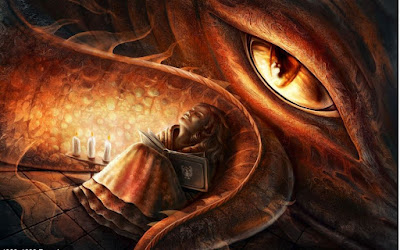
Dragon: Do humans hoard things?
Human: Sometimes, I guess. Do you have a big pile of treasure somewhere?
Dragon: Absolutely not! Those gold hoarding dragons really give us a bad name!
Human: So what do you hoard?
Dragon: Books, of course
Human: But you're a fire dragon.
Dragon: I know! I find these poor abandoned books, but I can't even read them because I'll burn them
The human runs off and grabs an armful of books, before coming back to sit by the dragon.
Human: "Chapter One. The Mole had been working hard all the morning, spring-cleaning his little home. First with brooms, then on ladders and steps and chairs, with a brush and a pail of whitewash; till he had dust in his throat and splashes of whitewash over his black fur, and an aching back and weary arms. Spring was moving in the air above, below, and around him, penetrating even his dark and lowly little house with its spirit of divine discontent and longing.”
Tuesday, February 15, 2022
Newsletters from Groundwood Books for Educators, Librarians, and Parents
The 2021 Caldecott Award Winning Picture Book - Watercress
Friday, February 11, 2022
The new television series of Around the World in Eighty Days
This February the BBC and Masterpiece released a new television series that is loosely based on the story in Jules Verne's Around the World in Eighty Days. The story has been changed a fair bit, but I have to say that it is very entertaining, and is beautifully made. I am enjoying the series a great deal, accepting that this is an adaptation of Jules Verne's tale. If you are a purist and only watch films that are faithful to the books that inspired them, then this series will probably not suit you.
Thursday, February 10, 2022
Did anyone try to go around the world in eighty days?
In Jules Vern's book, Around the World in Eighty Days, the heroes in the story are men. The book was first published in French in 1872, and at this time adventure stories did not have female heroes; it simply wasn't done.
The story caused quite a stir, and I would have thought that many gentleman adventurers would have tried to duplicate the journey taken in the book. I cannot find a record anywhere of a single man doing so. Not a one. Really, did none of the gentleman adventurers of the time read books? Did none of them have even a soupcon of imagination or derring-do?
Apparently not. It wasn't until 1889 when someone took on the challenge. A woman called Nellie Bly undertook to travel around the world in eighty days for her newspaper, the New York World. She managed to do the journey within seventy-two days, and she met Jules Verne in Amiens in France. Her book Around the World in Seventy-Two Days became a best seller. Who was this remarkable woman?
Cochran, Pennsylvania. At the age of six, Bly lost her father. Unable to maintain the land or their house, the family moved. Her mother also remarried but later divorced due to abuse. While attending Indiana Teacher’s College, Elizabeth added an “e” to her last name becoming Elizabeth Jane Cochrane. Due to the family’s financial crisis she was unable to finish her education. No longer in school, Bly focused on helping her mother run a boardinghouse. One day an upset Bly decided to pen an open letter to the editor of the Pittsburgh Dispatch. Her short but important piece pointed out the paper’s negative representation of women. The editor not only read Bly’s response, he printed her rebuttal, and offered Bly a job as columnist. As a newspaper writer, she took the pen name Nellie Bly. Although Bly was a popular columnist, she was often asked to write pieces that only addressed women.
Wanting to write pieces that addressed both men and women, Bly began looking for a paper that would allow her to write more serious work. In 1886, she moved to New York City. As a woman, Bly found it extremely hard for her to find work. In 1887, Nellie Bly stormed into the office of the New York World, one of the leading newspapers in the country. She expressed interest in writing a story on the immigrant experience in the United States. Although, the editor declined her story, he challenged Bly to investigate one of New York’s most notorious mental hospitals. Bly not only accepted the challenge, she decided to feign mental illness to gain admission and expose how patients were treated. With this courageous and bold act Bly cemented her legacy as one of the foremost female journalists in history.
| Nellie wearing her travel outfit. |
I have reviewed several books for young readers about Nellie Bly, which you can find in the TTLG library.