
Sunday, May 12, 2013


Friday, May 10, 2013
Poetry Friday - A review of Face Bug
Imagine what it would be like to go to a museum where they were displaying a series of photos showing the faces of insects and spiders. If one were an insect or spider this would be like going to a portrait gallery. Today's book combines poetry and art to take readers into The Face Bug Museum, and it is quite a trip.
 Face Bug
J. Patrick Lewis
Illustrations by Kelly Murphy
Photographs by Frederic B. Siskind
Poetry Picture Book
For ages 6 to 10
Boyds Mills Press, 2013, 978-1-59078-925-4
Come one, come all! The Face Bug Museum is open, and insects, spiders, and their guests are invited to take a look at the photographs that is on display. The photographers who took the pictures feel that “you never really know bugs till you look them in the eye,” which is why all the photographs focus on the heads and faces of insects and spiders. Bring your camera and be prepared to be amazed, and perhaps even shocked. Don’t worry if the faces make you feel faint. Tiny Vet is “standing by” to treat anyone who gets the heebie geebies.
We begin with the Hickory Horned Devil, which is the larva of a moth. The creature in the photo looks like a cross between a porcupine and a “Country-colored coral reef,” and it is certainly scary, but in reality this caterpillar is a gentle creature and the only living thing that needs fear it are the leaves it snacks on.
In the next photo we see the head of an Eastern Carpenter Bee. Though they look threatening, these bees are not a danger to anyone. They do like to drill holes in wood though, so you might find their holes in your home if it is made out of wood.
Further on in the show you will meet the Bush Katydid. This rather showy insect is standing on a stage in front of its photograph and it has happy to talk about itself. It admits that it looks rather like a grasshopper, but its green body can make it look like a leaf in the right surroundings, which is handy in a world that is full of predators. In addition to being a master of camouflage, the katydid is a singer and a “petty thief.”
In this memorable book Patrick Lewis’ amusing poems are paired with wonderful photos and amusing illustrations to give young readers a tour through a museum that is unlike any other. Information about each insect or spider species is incorporated into the poems. Readers will also find additional facts about the fourteen creepy crawlies featured in the show at the back of the book. Children will get to know the insect and spider characters that appear on the pages, and they may even finding themselves growing fond of them.
 Face Bug
J. Patrick Lewis
Illustrations by Kelly Murphy
Photographs by Frederic B. Siskind
Poetry Picture Book
For ages 6 to 10
Boyds Mills Press, 2013, 978-1-59078-925-4
Come one, come all! The Face Bug Museum is open, and insects, spiders, and their guests are invited to take a look at the photographs that is on display. The photographers who took the pictures feel that “you never really know bugs till you look them in the eye,” which is why all the photographs focus on the heads and faces of insects and spiders. Bring your camera and be prepared to be amazed, and perhaps even shocked. Don’t worry if the faces make you feel faint. Tiny Vet is “standing by” to treat anyone who gets the heebie geebies.
We begin with the Hickory Horned Devil, which is the larva of a moth. The creature in the photo looks like a cross between a porcupine and a “Country-colored coral reef,” and it is certainly scary, but in reality this caterpillar is a gentle creature and the only living thing that needs fear it are the leaves it snacks on.
In the next photo we see the head of an Eastern Carpenter Bee. Though they look threatening, these bees are not a danger to anyone. They do like to drill holes in wood though, so you might find their holes in your home if it is made out of wood.
Further on in the show you will meet the Bush Katydid. This rather showy insect is standing on a stage in front of its photograph and it has happy to talk about itself. It admits that it looks rather like a grasshopper, but its green body can make it look like a leaf in the right surroundings, which is handy in a world that is full of predators. In addition to being a master of camouflage, the katydid is a singer and a “petty thief.”
In this memorable book Patrick Lewis’ amusing poems are paired with wonderful photos and amusing illustrations to give young readers a tour through a museum that is unlike any other. Information about each insect or spider species is incorporated into the poems. Readers will also find additional facts about the fourteen creepy crawlies featured in the show at the back of the book. Children will get to know the insect and spider characters that appear on the pages, and they may even finding themselves growing fond of them.
Monday, May 6, 2013
Picture Book Monday - A review of The Museum
I still remember the first time I went to a real art museum. My father took me to the National Gallery in London. I was so in love with the lions and fountain and Trafalgar Square that he had a hard time getting me into the museum, but once I was inside I felt as if I had been transported to a magical place. It was a magical place, and I will never forget how much I enjoyed my time there.
Today's book celebrates art museums and it explores the nature of creativity.

Today's book celebrates art museums and it explores the nature of creativity.

Susan Verde
Illustrated by Peter H. Reynolds
Picture Book
For ages 6 and up
Abrams, 2013, 978-1-4197-0594-6
One sunny day a girl goes to the art museum and when she
looks at a work of art she doesn’t just see the painting or the sculpture, she
reacts to it. As she tells us, “something happens in my heart.” Her response to
the art cannot be contained and her body “goes into action.”
When she sees a
painting of a ballet dancer she feels that she needs to pose as a dancer does
and stand on her “tippy-toes.” A painting of swirling stars in a night sky
makes her feel “twirly swirly,” while a painting of a sad blue face makes her
feel lonely and down. A field of flowers makes her feel skippy, and abstract
colorful swirls and squiggles give her a fit of the “giggles.”
Then the girl
comes across a large empty canvas. What does it mean? Is the non-painting “a
joke?”
In this
delightful picture book the author and illustrator celebrate art museums and
the journeys and adventures that they allow us to take when we look at the
artworks in their galleries. The story also explores the way art can be created
out of nothing, cajoled out into the open by inspiration and creativity. The
emotions the little girl in the story experiences seem to bounce off the pages,
and the ending will give readers of all ages something to think about.
Friday, May 3, 2013
Poetry Friday - A review of The year comes round: Haiku Through the Seasons
Traditionally haiku poems were used to capture precious moments, moments that were little gems from the natural world. Often the poems were seasonal in nature. In today's poetry title we travel through a year and the author gives us a haiku with a nature theme for every month.

Sid Farrar
Illustrated by Ilse Plume
Poetry Picture Book
For ages 6 to 9
Albert Whitman, 2012, 978-0-8075-8129-2
It is wintertime and when we get up in the morning there
is frost on the windows so that “Each windowpane’s a / masterpiece,” of
delicate frost designs. When snow falls,
children build a snowman, who hopes that the “noon sun won’t / notice” that it
is there.
In the spring a
mother robin’s eggs hatch and she has to get busy finding food for her chicks.
Luckily food is plentiful and she is able to bring an earthworm “back to her
nest to / meet her family.”
Summer evenings
bring careful watchers a special treat. As light fades “fireflies quietly blink
/ their secrets.” This is also the time of year when one is most likely to
experience a violent thunderstorm. Fed by the heat and moisture in the air,
“Thick, black clouds grumble” above the “parched earth below.”
Haiku is a
poetry form that traditionally uses words to capture a picture of something
from the natural world, and the poems are often seasonal in nature. The author
of this book follows the Japanese haiku custom by focusing on nature, taking
readers through the twelve months of the year with gem like poems. The poems
are paired with lovely illustrations and at the back of the book readers will
find more information about haiku, and “The Cycle of Life.”
Monday, April 29, 2013
Picture Book Monday - A review of Baby Penguins Everywhere!
I work from home, which means that I spend a lot of time alone. At least alone in the sense that there are no other humans around. I usually have three dogs and at least one of my two cats in my office when I am working. I love working at home, but there are times when I crave human company. I can therefore relate to the penguin in this story, who, like me, enjoys her time alone. Most of the time.

Melissa Guion
Picture Book
For ages 4 to 6
Penguin, 2012, 978-0-399-25535-9
Floating on an ice floe, a penguin enjoys the “peace and
quiet of the sea and ice.” However, there are times when she feels rather
lonely. Then one day she finds a hat floating in the water, and in the hat
there is a little penguin. One little penguin is a big surprise, but then
another penguin chick pops out of the hat, which is followed by another.
Soon there are
baby penguins all over the place, and the penguin who was once lonely is lonely
no longer. Instead, she is extremely busy playing with and taking care of the
baby penguins. In fact, she is so busy that she gets rather tired and worn out.
Though we love
our family and friends, and though we want to spend time with them and do
things for them, all of us have moments when we start to feel a little
overwhelmed, when we need a little time to ourselves to sit and be quiet.
In this sweet
and beautifully minimal book, Melissa Guion explores the idea that everyone
needs a little break once in a while, and she manages to do so with sensitivity
and humor.
Friday, April 26, 2013
Poetry Friday - A Review of Forest has a song
I love reading poetry collections where the poems look at the seasons, and have reviewed several titles of this kind over the years. Today's title takes readers on a journey through the seasons in a forest, and we have a little girl for company who shows us some of the wonderful places, plants, animals, and trees that can be found in forest.

Amy Ludwig Vanderwater
Illustrated by Robbin Gourley
Poetry Picture Book
For ages 6 and up
Clarion, 2013, 978-0-618-84349-7
Not far from a girl’s little red house there is a forest.
One morning, while she is outside, the girl hears a “pinecone fall” and she
smells the “spicy” tang of the pine trees on the wind. She is drawn to the
forest that seems to be asking her to “Come visit. / Please?”
In the forest
she meets a chickadee, whom she invites to come and eat some of seeds that she
is holding. She tells the little bird that it is “safe to land” on her hand and
that she is not a threat. The bird is afraid of the child, but at the same time
it cannot help seeing the seeds that rest in the hand that is still. Perhaps
such a small child is not something to fear after all.
In the spring
the child finds fiddleheads in the forest. These are ferns that are uncurling
as the weather warms, and their presence
indicates that winter is finally over. High in a tree she hears a tree fog
calling. It is trying to convince a potential wife that it is “one great frog.”
Summer is the
perfect time to have adventures in the forest. Barefoot, the girl walks on a
bed of moss, her feet sinking into the “velvet green.” She wishes her socks
felt as good as the moss does. Summer is also the time when poison ivy grows
everywhere. One must look for those three leaves and avoid them because “One
green / touch can itch / so much.”
In fall the maple
trees begin to change their “leaves to red,” and one hears the call of geese
overhead. Then the first snow arrives and the girl stands outside in the woods
with her eyes closed listening to “snowy voices / crystal clear.”
This lovely book takes readers through a
forest year. We celebrate special moments with the girl, and explore the lovely
world that is her refuge and her playground. We discover treasures from nature,
and meet animals who share their lives with us.
Throughout the
book beautiful poems in a variety of forms are paired with emotive watercolor
paintings that readers will enjoy reading and looking at again and again.
Monday, April 22, 2013

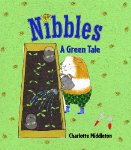
Picture Book Monday - A review of Nibbles: A Green Tale
Happy Earth Day! I hope you have a wonderful day exploring and enjoying this beautiful planet we live on. I have a picture book for you today that explores a very important environmental issue.
We have two guinea pigs, Caramel and Fudge Ripple. I am sorry to say that they really don't have much to say other than "Wheeeeeee!" when they want their breakfast and dinner. The guinea pigs in today's picture book are much more interesting. In fact, they are intelligent animals who make a very important decision regarding their natural resources.
We have two guinea pigs, Caramel and Fudge Ripple. I am sorry to say that they really don't have much to say other than "Wheeeeeee!" when they want their breakfast and dinner. The guinea pigs in today's picture book are much more interesting. In fact, they are intelligent animals who make a very important decision regarding their natural resources.
Charlotte Middleton
Picture Book
Ages 5 to 7
Marshall Cavendish, 2010, 978-0-7614-5791-6
Nibbles, like all
the guinea pigs in Dandeville, loves to eat dandelion leaves. As far as Nibbles
and the other guinea pigs are concerned, dandelions are the crème de la crème
of guinea pigs foods. They eat dandelion leaves at every meal, and in-between
as well.
Then the most
terrible thing happens, the dandelions in Dandeville start to run out. The
guinea pigs are forced to buy dandelion leaves at exorbitant prices on the
Internet. They are even forced to eat cabbage leaves instead. What is to be
done?
When Nibbles finds
the last dandelion plant growing outside his bedroom window, he is tempted to
eat it, but instead he does a little research and he sets about doing what he
can to take care of and nurture the dandelion plant. Nibbles has a long term
plan that could make life better for all the guinea pigs in Dandeville.
In this
delightfully picture book, Charlotte Middleton shows her young readers how
important it is to think of the future. If we preserve our natural resources
now, then we will have natural resources in the future. Using an engaging story
and wonderful multimedia illustrations, the concept of sustainability is
beautifully presented from the point of view of guinea pigs.
Friday, April 19, 2013
Poetry Friday - A review of Something Fishy
When I was growing up we went camping at the seaside every summer. We pitched tents on the beach and for days I had a wonderful time building things out of rocks, swimming, exploring the beach, and snorkeling. I would snorkel for so long my skin got wrinkly and my face mask left a red line on my forehead. I loved to watch the little fish, eels, and other underwater creatures. I would have thoroughly enjoyed reading this book of poetry, which explores the lives of animals that live in water.

Barry Louis Polisar
Illustrations by David Clark
Poetry Picture Book
For ages 6 to 8
Rainbow Morning Music, 2013,
978-0-938663-53-9
Watching, photographing, and
learning about animals is something many people enjoy doing. Men, women, and
children watch nature shows, visit zoos, go on safaris and find other
opportunities to see animals in their natural environment. There are many
people who are particularly taken with animals who live in oceans, seas, and
lakes, and they put on masks, carry tanks of oxygen on their backs, and put up
with freezing cold water so that they can see fish, whales, and other animals
going about their business.
For those of us who are not really interested in getting
wet to see aquatic animals, there are movies and television shows to watch, and
books to read. Some books have made up stories about underwater explorations,
while others are nonfiction. Then there are authors who choose to describe
animals who live in water using poetry.
In this book Barry Louis Polisar’s clever poems are
paired with often amusing illustrations to give readers a little trip
underwater. We meet the oddly named sweetlips fish, and find out that horseshoe
crabs come on land to mate. Unfortunately, many of them “get stranded” when the
tide goes out because they are “followed nature’s calling.”
Some of the animals we meet on the pages are creatures we
would rather avoid in the real world. These include the jellyfish, “a
nettlesome bunch of bad luck,” and crocodiles and alligators. Others, such as
seahorses and barnacles are harmless, and if we were to encounter then we could
watch them without fear.
The last poem wraps up this collection perfectly. In it
the author celebrates all the creatures that live in water ending with the
words “Praise all that swims and floats.”
Well-crafted poems and wonderful artwork make this book a
must for anyone who likes poetry or who has a fondness for seas, oceans, lakes,
and rivers.
Monday, April 15, 2013
Picture Book Monday - A review of Red Hat
As every parent and pet owner knows, young children and animals often get a great deal of pleasure playing with things that are not toys. For example, instead of playing with the toy barn they were given, children play with the box that the barn came in. Instead of playing with the catnip mouse that cost far too much, the cat plays with a cork that fell on the floor.
In today's book you will meet some young animals who play with a red hat and who have a wonderful time doing so.
In today's book you will meet some young animals who play with a red hat and who have a wonderful time doing so.

Lita Judge
Picture Book
For ages 4 to 6
Simon and Schuster, 2013,
978-1-4424-4232-0
It is a pleasant sunshiny day a
little girl sets up her washtub on the grass in front of her home and washes
her red knitted hat. When it is clean, she carefully pins it to the clothes line
by its white tassel, and the she goes back into her little house. Some rabbits
and a pair of bears see the hat on the line and they decide that it would make
a grand toy. As soon as the bear cub gets its paws on the hat, it runs off,
with the rabbits in hot pursuit. Then a raccoon snags the hat from its tasseled
end and gallops off with the hat on its head.
As the raccoon runs, the hat sprouts a long red piece of
yarn from its pointy top with the tassel hanging on the end. A little rabbit
manages to snag the yarn, and a tiny mouse is thrilled when it manages to grab
hold of the yarn near the tassel. How rewarding little triumphs of this kind
can be! The adventure is not over though. The hat and the young playful animals
have more to do.
Lita Judge, who brought us the picture book Red Sled, is a gifted storyteller who
manages to tell her tale without using any real words at all. The only sounds
this book offers readers are the noises that the young animals make as they
steal, play with, and then return the hat. Children are going to love the
surprise ending, which brings the tale to a wonderful close.
Subscribe to:
Comments (Atom)
