I have said it before and I will say it again: these are trying times. For the most part the news is full of stories about loss, suffering, and evil-doing. It is depressing. What does one do in such times? Eating a lot of chocolate is a good place to start, but, alas, the pleasure eating chocolate gives does not last long, and the consumption of said delight inevitably leads to feelings of guilt.
I am firm believer in the therapeutic power of books, and so I always find myself turning to old book friends in times of trouble. One of my favorite book friends is the book The House at Pooh Corner. One cannot read this book without cracking a smile, which then leads to one experiencing a softening of the edges feeling. By the time the last page is read, the heart is eased, and hope starts to gather itself up once more,
The House at Pooh Corner
A. A. Milne
Illustrator: Ernest H. Shepard
Fiction Series
For ages 5 and up
Penguin, 1988, 978-0525444442
It seems as if we have only just begun to get to know Winnie-the-Pooh and his friends, and yet here we are having to prepare ourselves to say goodbye already. And yet there are still a few more stories that need to be told before we leave. The stories include, among others, a tale about a Heffalump, one about the search for Small, and we hear about how Tigger comes to the forest.
Indeed, Tigger features quite prominently in this collection of tales. He arrives in the middle of the night, full of enthusiasm and bounces. He tells Pooh that Tiggers like to eat everything, but they soon find out that this is not quite true. Tiggers do not like honey, nor do they care for haycorns. And as for thistles, well they are far too hot and have “too many spikes.” It becomes clear that it is going to be no easy task to find out what Tiggers do like to eat.
Thankfully, Tigger does find out what his favorite food is and, to the relief of everyone, he goes to live with Kanga and Roo. Then the bouncy animal and Roo get into a spot of bother when the two friends decide to climb a tree. It turns out that that Tiggers are very good at getting up trees but they are not very skilled at getting down.
There can be no doubt that this book will appeal to readers of all ages. Children will love to hear about the simple adventures that Pooh and his friends have. Older readers will discover that Pooh’s Hundred Acre Wood world is not that different from the one that we live in. The mistakes that are made and the confusions that are occur sound awfully familiar. As for the characters, well they are so like real people that we almost expect to see Rabbit living next door. After all, we all know people who like to be admired – like Rabbit – and others who like to pretend that they know more than they actually do – like Owl. There are those quiet and shy little folks who dream of being a hero one day – like Piglet, and finally there are those who don’t realize that they have a lot more to offer the world than they think they do – like Pooh himself.
Welcome!
Dear Book Lovers,
Welcome! I am delighted that you have found The Through the Looking Glass blog. For over twenty years I reviewed children's literature titles for my online journal, which came out six times a year. Every book review written for that publication can be found on the Through the Looking Glass website (the link is below).
I am now moving in a different direction, though the columns that I write are still book-centric. Instead of writing reviews, I'm offering you columns on topics that have been inspired by wonderful books that I have read. I tell you about the books in question, and describe how they have have impacted me. This may sound peculiar to some of you, but the books that I tend to choose are ones that resonate with me on some level. Therefore, when I read the last page and close the covers, I am not quite the same person that I was when first I started reading the book. The shift in my perspective might be miniscule, but it is still there.
The books I am looking are both about adult and children's titles. Some of the children's titles will appeal to adults, while others will not. Some of the adult titles will appeal to younger readers, particularly those who are eager to expand their horizons.
Thursday, June 15, 2017
Monday, June 12, 2017
Picture Book Monday with a review of Niko Draws a Feeling
I once had a teacher who thought that his interpretation of a poem, play, or novel was the only interpretation that was worth anything. When I tried to offer up my ideas about what I thought the writer was saying, I was firmly shot down. I found this very annoying. Everyone brings their own perspective to the table when it comes to interpreting a piece of writing, a piece of music, or a work of art. Similarly, writers, musicians, and artists perceive the world in different ways.
In this picture book readers will meet a little boy who loves to draw feelings, and unfortunately no one really understands his art. His friends and family members think he should be drawing things rather than emotions, and they are confused by his creations. They do not understand that Niko has a different way of seeing and interacting with his world.
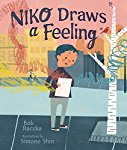
Niko Draws a Feeling
In this picture book readers will meet a little boy who loves to draw feelings, and unfortunately no one really understands his art. His friends and family members think he should be drawing things rather than emotions, and they are confused by his creations. They do not understand that Niko has a different way of seeing and interacting with his world.
Niko Draws a Feeling
Bob Raczka
Illustrations by Simone Shin
Picture Book
For ages 5 to 7
Carolrhoda, 2017, 978-1-4677-9843-3
Niko loves to draw pictures and he is constantly being
inspired by the things that he sees around him. The thing about Niko is that he
likes to draw feelings, sounds, and sensations rather than things. Instead of
drawing the ice cream truck, he draws the ‘ring-a-ling’ sound that the ice
cream truck bell makes. Instead of drawing the autumn sun, he draws the
sensation of the sun’s warmth on his face. Instead of drawing a mother robin
that is hard at work building her nest he draws her work, her labors as she
builds her nest.
Niko loves his
unique creative process and the way in which inspiration comes to him, but he
cannot help feeling a little sad that his friends, parents, and teacher don’t
understand his art. Not being able to share what he is doing with others is
hard, and life is a little lonely for the boy. One day he draws a self-portrait
of his feelings and he puts this portrait behind a door. No one will understand
it anyway.
Then, one day a
girl called Iris moves in next door, and something truly remarkable happens.
This wonderful
book celebrates the creative process and explores the idea that people see and
experience the world in different ways. The important thing to remember is to
be open to those differences, because you never know what new wonders you will
discover if you do.Monday, June 5, 2017
Picture Book Monday with a review of The Darkest Dark
Facing your fears is never easy to do. Imagine what it would be like to be a chef who is afraid of knives, or a doctor who has a fear of needles. In this clever picture book biography you will meet a little boy who loves to pretend that he is an astronaut and who is fascinated by space. Perhaps he even dreams of going up into space one day. There is a problem though; the little boy is afraid of the dark.
The Darkest Dark
The Darkest Dark
Chris Hadfield
Illustrated by the Fan Brothers
Picture Book
For ages 5 to 7
Tundra Books, 2017, 978-1-101-91862-3
Chris loves pretending that he is an astronaut. In fact,
he is often so busy flying around in his cardboard rocket, saving the planet
from aliens or visiting Mars, that he has a hard time making time for baths and
bedtime. After all “An astronaut’s work is never done,” and they don’t like
wasting time on sleep. The problem is that Chris’ parents do like to sleep and so they are not best pleased when Chris climbs
into bed with them. Nor are they too thrilled when he tells them that the
darkness in his room is the kind that “attracts the worst sorts of aliens.”
Some parents
might give in at this point and let their son sleep with them, but Chris’
parents are putting their feet down. Chris will get over his fear of the dark
and he will sleep in his own bed. They check to make sure that his room is “100
percent alien free,” they turn on his night light, and they even give him a
bell to ring if he gets nervous. Then they take the bell away.
Chris is then
told that he needs to stop his fooling around because if he doesn’t he will not
be able to attend the special event that is going to take place at their
neighbor’s house the next day. Being able to go next door the next day is so
important to Chris that he stays in his bed, and after a long time he falls
asleep. What Chris does not know yet is that his experiences the next day will
change how he feels about the dark, and it will influence the choices that he
makes in his life in the future.
Written by the
first Canadian astronaut to walk in space, this wonderful picture book shows
young readers how a single event can change ones perspective and even change
one’s life. In Chris’ case what he saw that on that special night at his
neighbor’s house planted the seed of a dream in his heart, and it was a dream
that he never gave up on. He worked hard until the day came when he finally got
his chance to go into space.
At the back of
the book young readers will find further information about Chris Hadfield. They
can also read a message from Chris, and see photos of him when he was a little
boy and when he was an adult working in space at the International Space
Station.Wednesday, May 31, 2017
Books of Hope - The Year the Swallows Came Early
There are many things that, when they take over our lives, take away our ability to hope. One of these things is anger. Anger is an ugly, burning emotion that destroys hope, and it can truly warp a person until he or she has completely forgotten how amazing life can be. Today's Book of Hope celebrates the way in which forgiveness can triumph over hate, and as the story unfolds we are able to see how this shift makes it possible for hope to grow and blossom.
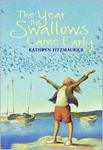
The Year the Swallows Came Early
Kathryn Fitzmaurice
Fiction
For ages 9 to 12
HarperCollins, 2004, 978-0061624971
Groovy Robinson's father has been arrested and taken to jail. This is terrible and devastating thing to happen, but what makes it even worse is the fact that Groovy's mother was the one who had him arrested. Feeling shocked and betrayed, Groovy cannot understand why her mother would do such a thing, and she feels as if her whole life has been turned upside down.
Groovy loves cook and to think about food. In her opinion one can match food to situations and to people. Groovy loves cooking so much in fact, that she hopes to go to culinary school when she gets older. Groovy's great-grandmother Eleanor left Groovy some money, which Groovy hopes to use to pay for her schooling. She is therefore devastated when she learns that the reason why her father is in jail is because he took her inheritance out of the bank and gambled it away
Some years ago the mother of Frankie, Groovy's friend, abandoned him. Frankie refuses to forgive his mother and has become very bitter as a result. Not wanting to become like Frankie, because she can see how damaging his anger is, Groovy tries very hard to stay positive, even though she does not understand why her father stole from her. She starts working on raising money by making chocolate covered strawberries, which she sells. However, despite her good intentions, when the depth of Groovy's father's betrayal is revealed, Groovy's anger takes over. Now she is in real danger of turning into a bitter person, just like Frankie.
This powerful and meaningful book explores the nature of forgiveness, the meaning of true friendship, and the love of family. The author beautifully weaves her message into the rich and warming story. Sprinkled with vivid and incredibly genuine characters, this story will delight readers with its unique style and its compelling narrative.
The Year the Swallows Came EarlyKathryn Fitzmaurice
Fiction
For ages 9 to 12
HarperCollins, 2004, 978-0061624971
Groovy Robinson's father has been arrested and taken to jail. This is terrible and devastating thing to happen, but what makes it even worse is the fact that Groovy's mother was the one who had him arrested. Feeling shocked and betrayed, Groovy cannot understand why her mother would do such a thing, and she feels as if her whole life has been turned upside down.
Groovy loves cook and to think about food. In her opinion one can match food to situations and to people. Groovy loves cooking so much in fact, that she hopes to go to culinary school when she gets older. Groovy's great-grandmother Eleanor left Groovy some money, which Groovy hopes to use to pay for her schooling. She is therefore devastated when she learns that the reason why her father is in jail is because he took her inheritance out of the bank and gambled it away
Some years ago the mother of Frankie, Groovy's friend, abandoned him. Frankie refuses to forgive his mother and has become very bitter as a result. Not wanting to become like Frankie, because she can see how damaging his anger is, Groovy tries very hard to stay positive, even though she does not understand why her father stole from her. She starts working on raising money by making chocolate covered strawberries, which she sells. However, despite her good intentions, when the depth of Groovy's father's betrayal is revealed, Groovy's anger takes over. Now she is in real danger of turning into a bitter person, just like Frankie.
This powerful and meaningful book explores the nature of forgiveness, the meaning of true friendship, and the love of family. The author beautifully weaves her message into the rich and warming story. Sprinkled with vivid and incredibly genuine characters, this story will delight readers with its unique style and its compelling narrative.
Tuesday, May 30, 2017
Kickstart every child into a lifetime love of reading with the Gecko Press Curiously Good Book Club
Kickstart every child into a lifetime love of reading
Gecko Press, the pint-sized Wellington-based independent publisher of curiously good children’s books, is starting a new club with the aim that every child discovers the love of reading.
“We want reading to be seen as fun, accessible, visible and important – and so we are starting the Curiously Good Book Club,” says Publisher Julia Marshall.
“The club will be a place where people can talk about the books they love to share with kids, find out about books, access real and online events, share knowledge and experience – all designed to get kids' noses into books,” she says.
“We’re not worried about the rise of digital books – but we are worried about the effect of digital distraction on reading,” says Marshall. “At Gecko Press we think it’s time to encourage people who love books to get loud about reading. We want to take reading out of the bedrooms and onto the streets!”
The Curiously Good Book Club will include activities for kids, physical events and an online platform. It aims to be a digital and real life community for people who love children’s books, where they can share knowledge about great books (not just Gecko Press books) and find creative ways to encourage children to love to read.
It will cost at least $50,000 to get the club off the ground. Gecko Press is investing $15,000 for the next phase and crowdfunding the remaining $35,000 by offering tangible rewards.
“Most of this money will go to improving the digital experience and backbone of the club, so we can offer fun things like events, reading incentives – such as tiny reading journals and stickers – and ways to share knowledge of great books,” says Marshall.
“The digital side is too expensive for us to do on our own. The idea of the club really changed for me when I realised that we don’t just want people reading Gecko Press books – we want them reading all good books. We want our booksellers to thrive, and libraries and schools, and we want children to really rate reading.”
Gecko Press is offering surprise packs of books and regular book parcels that can be sent directly to a favourite school, library or child.
There are some big-ticket options for enthusiastic supporters, who can choose a mix of books, discounts, signed books and book donations to a school or library of choice.
“The aim of the Curiously Good Book Club is to kickstart every child into a lifetime love of reading,” says Marshall. “Sometimes all it takes is one good book, or the right book for the right child at the right time. It doesn’t matter what that book is or where you find it – but it does matter that children love to read.”
Gecko Press is an independent, international publisher, based in Wellington. Gecko Press publishes a small number of edgy yet proven – curiously good – children’s books from the best writers and illustrators in the world, translated into English. We want to make reading accessible and visible. Our aim is that every child discovers the love of reading.
For more information about the Curiously Good Book Club or the
Gecko Press PledgeMe campaign, visit pldg.me/gecko or contact Faustine
Tillard faustine@geckopress.com – 04 801 9333.
Monday, May 22, 2017
Picture Book Monday with a review of How the Queen found the perfect cup of tea
For many people a cup of tea offers comfort in times of stress and tribulation, and the making of a pot of tea gives others something to do at such times. People all over the world begin or end their day with a cup of tea, and in some places the making of tea is a ritual that is treasured.
Today's picture book introduces us to a queen who decides that she needs to find someone who can make her the perfect cup of tea. In the process, she discovers something that brings about a big change in her life.
How the Queen found the perfect Cup of tea
Today's picture book introduces us to a queen who decides that she needs to find someone who can make her the perfect cup of tea. In the process, she discovers something that brings about a big change in her life.
How the Queen found the perfect Cup of tea
Kate Hosford
Illustrated by Gabi Swiatkowska
Picture Book
For ages 5 to 7
Carolrhoda, 2017, 978-1-4677-3904-7
Every morning the queen gets up and her maids dress her
and do her hair. Her butler makes her tea, which she drinks alone. Over time the
queen’s morning tea ceases to give her any joy or pleasure. In fact, with every
passing day it tastes worse and worse until she decides that she simply cannot
drink the tea any longer. She “must find the perfect cup of tea,” and soon enough
the queen and her long-suffering butler, James, are floating across lands and
seas in a hot-air balloon.
The queen
decides when they have gone far enough and James brings the hot-air balloon
down. The queen then meets a little girl called Noriko who announces that the
queen is just in time because her cats would like to be snuggled. The queen
instructs James to tell Noriko that she does not snuggle anything. Most people
would back down at this point, but Noriko does not. She feels that this is the
perfect time for the queen to try snuggling.
Before the queen
quite knows what is what she is snuggling, and being snuggled, by Noriko’s cat.
The queen finds the whole experience “rather strenuous,” and she asks Noriko if
she might have some tea. Noriko is happy to make some tea, though she expects
the queen to help, which the monarch, who has never even made the effort to
help in the tea making process, manages to do.
Noriko makes the
tea, using the methods favored in her native land of Japan, and then the little
girl and the queen partake of their refreshment, talking all the while.
The queen then
says her goodbyes and she and James sail off in their balloon. Though Noriko’s
tea was delicious, it was not the perfect cup of tea and so the quest must
continue.
All too often,
when something is not quite right we blame something or someone else for the
problem. We never consider that maybe, just maybe, the problem lies with us. In
this delightful picture book we meet a cold, rather stuck up queen who takes a
journey and discovers that sometimes what we are looking for is right under our
noses.
What is charming
about this book is that in addition to the engaging story we also get to learn
about the tea traditions in three countries. At the back of the book the author
also offers us an author’s note in which she tells us about tea, and about the journey
that she took as she wrote this book.Friday, May 19, 2017
Poetry Friday with a review of Fresh-Picked Poetry: A day at the farmer’s market
Here is southern Oregon it finally feels as if summer is on its way. One of the things many of us look forward to during the warmer months are our local farmer's markets. Our weekly market reopened recently, and it was wonderful to see the familiar faces again, and to get big hugs from the mushroom man and from the pie lady. Today's poetry title gives us the opportunity to visit a farmer's market and to experience the many treats that such markets offer visitors.
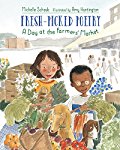
Fresh-Picked Poetry: A day at the farmer’s market
Michelle Schaub
Illustrated by Amy Huntington
Poetry Picture Book
For ages 5 to 7
Charlesbridge, 2017, 978-1-58089-547-7
It is market day, which means that while you are asleep “snuggled tight,” farmers are up and about harvesting, sorting, washing, and loading their crops. Then they “Hit the road / Just as dawn / pinks the sky.” By the time we arrive, with baskets and bags at the ready, their tents are up, and their tables are loaded with their wares.
Some of the farmers, like Farmer Rick, like to arrange their produce so that it looks beautiful. He creates “cauliflower towers” and “pyramids of peppers,” and everything is always laid out in “perfect symmetry.”
Fruits and veggies are not the only things you can buy in a farmer’s market. Take a deep sniff and it is likely that you are going to pick up the aroma of mouth-watering baked goods. Floating over the market comes “a whiff of vanilla, a whisper of spice.” We follow our nose to find tables laden with cupcakes, pies, bread, croissants, and muffins, all of which are still warm from the oven.
Often musicians play at the market, entertaining the shoppers with their songs and melodies. Children can get their faces painted, and they can choose a dress-up costume from a big chest to wear. While they play, their grownups wait in lines to shop and to have their knives and scissors sharpened by the knife sharpener.
When the market closes the musician’s “notes are hushed,” and the produce crates are empty. In their homes people unload their fruits and veggies, their eggs and baked goods, and their jars of honey.
This wonderful book of poetry takes readers out into the fresh air and sunshine where they get to experience the smells, sights, and sounds of a farmer’s market. Poems written in many forms allow us to enjoy the market vicariously; from dawn to the moment when the market closes down and the farmers head home.
Fresh-Picked Poetry: A day at the farmer’s marketMichelle Schaub
Illustrated by Amy Huntington
Poetry Picture Book
For ages 5 to 7
Charlesbridge, 2017, 978-1-58089-547-7
It is market day, which means that while you are asleep “snuggled tight,” farmers are up and about harvesting, sorting, washing, and loading their crops. Then they “Hit the road / Just as dawn / pinks the sky.” By the time we arrive, with baskets and bags at the ready, their tents are up, and their tables are loaded with their wares.
Some of the farmers, like Farmer Rick, like to arrange their produce so that it looks beautiful. He creates “cauliflower towers” and “pyramids of peppers,” and everything is always laid out in “perfect symmetry.”
Fruits and veggies are not the only things you can buy in a farmer’s market. Take a deep sniff and it is likely that you are going to pick up the aroma of mouth-watering baked goods. Floating over the market comes “a whiff of vanilla, a whisper of spice.” We follow our nose to find tables laden with cupcakes, pies, bread, croissants, and muffins, all of which are still warm from the oven.
Often musicians play at the market, entertaining the shoppers with their songs and melodies. Children can get their faces painted, and they can choose a dress-up costume from a big chest to wear. While they play, their grownups wait in lines to shop and to have their knives and scissors sharpened by the knife sharpener.
When the market closes the musician’s “notes are hushed,” and the produce crates are empty. In their homes people unload their fruits and veggies, their eggs and baked goods, and their jars of honey.
This wonderful book of poetry takes readers out into the fresh air and sunshine where they get to experience the smells, sights, and sounds of a farmer’s market. Poems written in many forms allow us to enjoy the market vicariously; from dawn to the moment when the market closes down and the farmers head home.
Labels:
Children's book reviews,
Poetry books,
Poetry Friday
Thursday, May 18, 2017
Books of Hope - Sidewalk Flowers
Some people think that the only way to really make other people happy, the only way to make a difference and give them hope, is to do something for them that is big, grand, and splashy. The truth is that sometimes small acts of kindness can have a huge impact on others. Making eye contact with a stranger and sharing a smile can make their day feel brighter. Calling or writing to a friend who is feeling blue can make them feel that they are not alone. Checking in on someone who is ill can make them feel that they are not forgotten. These are not big acts of kindness in terms of time, money, or effort, and yet their impact can be very big indeed.
Today's Book of Hope is a wordless picture book that shows, to great effect, just how powerful little act of kindness can be.
Sidewalk Flowers
JonArno Lawson
Illustrator: Sydney Smith
Wordless Picture Book
For ages 5 and up
Groundwood Books, 2015, 978-1554984312
One day a father and his little daughter are walking home after doing the shopping. As they walk down the busy sidewalks in the city, the little girl sees a small flowering plant that is growing at the base of a pole. She picks one of the plant’s yellow flowers and then on she and her father walk.
Further along she sees another flower, a purple one this time, growing out of a wall and she picks that. Near a bus stop there is a second yellow flower, which the little girl gathers up as her father talks on his cell phone. A little later the girl sees a flower that is growing near a stone lion and another pushing its way through a crack in the sidewalk.
The father and his daughter, who is now holding a bouquet of flowers, then walk into the park. The girl sees the body of a little bird lying in the path and she carefully places some of her precious flowers on the bird, her tribute to the life that was lost. She tucks flowers into the shoes of a homeless man who is sleeping on a bench, and places some under the collar of a dog who wants to be friends. With care the little girl leaves little gifts of flowers in her wake as she and her father make their way home.
This incredibly special wordless picture book explores the way in which accidental flowers, flowers some people even consider weeds, can bring color and brightness to a city world. What is perhaps even more powerful is the way in which the little girl gives the flowers she picks to others. Some of the recipients of these gifts may not even notice the flowers, but their lives are brightened by them all the same. The world we see in the story is made better because the kind little girl choses to give things she loves to others.
Today's Book of Hope is a wordless picture book that shows, to great effect, just how powerful little act of kindness can be.
Sidewalk FlowersJonArno Lawson
Illustrator: Sydney Smith
Wordless Picture Book
For ages 5 and up
Groundwood Books, 2015, 978-1554984312
One day a father and his little daughter are walking home after doing the shopping. As they walk down the busy sidewalks in the city, the little girl sees a small flowering plant that is growing at the base of a pole. She picks one of the plant’s yellow flowers and then on she and her father walk.
Further along she sees another flower, a purple one this time, growing out of a wall and she picks that. Near a bus stop there is a second yellow flower, which the little girl gathers up as her father talks on his cell phone. A little later the girl sees a flower that is growing near a stone lion and another pushing its way through a crack in the sidewalk.
The father and his daughter, who is now holding a bouquet of flowers, then walk into the park. The girl sees the body of a little bird lying in the path and she carefully places some of her precious flowers on the bird, her tribute to the life that was lost. She tucks flowers into the shoes of a homeless man who is sleeping on a bench, and places some under the collar of a dog who wants to be friends. With care the little girl leaves little gifts of flowers in her wake as she and her father make their way home.
This incredibly special wordless picture book explores the way in which accidental flowers, flowers some people even consider weeds, can bring color and brightness to a city world. What is perhaps even more powerful is the way in which the little girl gives the flowers she picks to others. Some of the recipients of these gifts may not even notice the flowers, but their lives are brightened by them all the same. The world we see in the story is made better because the kind little girl choses to give things she loves to others.
Monday, May 15, 2017
Picture Book Monday with a review of Reach for the Moon, Little Lion
Sometimes being different from everyone else is just plain miserable. For some reason other people like to make fun of those of us who are smaller, bigger, and smarter. They like to pick on people who they feel are more imaginative, more emotional, and more original than is 'normal.' In today's picture book you will meet a lion who is really small and who is teased because of his diminutive size. We also meet an animal who finds a way to give the lion just what he needs to feel better about himself.
Reach for the moon, Little Lion
Hildegard Muller
Picture Book
For ages 4 to 6
Holiday House, 2016, 978-0-8234-3777-1
There once was a lion who was smaller than all the other
lions. In fact he was so much smaller that the other animals teased him,
calling out “Are you a lion or a mouse?” when we was nearby. The crocodile went
so far as to say that the little lion was too small to be a lion at all. Lions
are “very big,” so big in fact that they can “touch the moon with a paw.”
That night the
little lion sat on a hill and looked up at the moon, which was so far above his
head. What would it be like to touch the moon, he wondered? One thing that he
was sure of was that touching the moon was not something he would ever be able
to do.
A raven saw how
sad the little lion was and asked him what was the matter. The little lion
explain that he was sad because he wanted to be big, big enough to touch the
moon. If he could do such a thing the other animals wouldn’t laugh at him anymore.
Was there a way to make the lion’s wish come true?
This charming
little story introduces young children to the idea that anything is impossible,
if you believe in yourself and use your creativity to find a solution to your
problem. Children will be delighted when they see how the raven helps the lion.
Perhaps they too can touch the moon if they want to.
Wednesday, May 10, 2017
Books of Hope - Creekfinding: A True Story

I am often inspired when I read or hear true stories about people who have done things to make the world a better place. They don't have to be world famous people, and the things they do don't have to have a huge international impact either. The fact that they have taken the step to do something that is bigger than themselves is enough to make me feel hopeful.
Today's picture book tells the story of a man who chose to bring back a creek that had been lost, and in so doing he brought back a rich ecosystem as well.
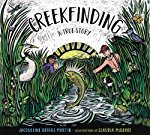
Creekfinding: A True Story
Jaqueline Briggs Martin
Illustrated by Claudia McGehee
Nonfiction Picture book
For ages 5 to 7
University of Minnesota Press, 2017, 978-0-8166-9802-8
Many years ago a spring “burbled out of the ground and
tumbled itself across a prairie valley” and it became a creek. The water was
home to fish, insects, frogs, birds, and many other creatures. Then the creek
was lost because a farmer used a bulldozer to fill it in with earth so that he
could plant big fields of corn. Instead of running through a creek bed, the
water from the spring flowed through a ditch and it no longer offered animals
and plants a habitat where they can thrive.
Many years after
the creek was lost, a man named Mike bought the field. He wanted to replace the
cornfield with a prairie once more. A neighbor told him that many years ago he
had caught a brook trout that was swimming in a creek that ran right through
the cornfield. Mike wanted to bring the creek and the brook trout back, but
when he told people about his plan they thought it was “foolishness.”
Using an old
photograph, Mike figured out the creek’s path and then he called some friends
who had excavating machines. For days the machines “carved holes, dug curves
and runs, tamped rocks for the creek bottom.” It was a beginning, but there was
still a lot of work to be done and no one knew if the water from the spring
would find its old path. A lot of things had to happen before brook trout would
be able to swim in the creek again.
All too often
when a habitat is lost due to farming or development it stays lost. Thankfully
for Brook Creek, Mike Osterholm cared enough about it to restore it to its
former glory. The restoration process took years to complete, and Mike had no
way of knowing if his plan would succeed. However, he did not let this stop him
from trying, and he worked hard to make his dream come true.
We all need to
hear stories like this one; true stories about people who have brought about
change and made the world a better place through their actions. Hearing such
stories lifts us up, and we are encouraged to do what we can to make our part
of the world more beautiful.
Throughout the
book the author’s narrative is supplemented by little snippets of information
that help us to better understand creek ecology and Mike’s restoration process.
The story is brought to life by the
gorgeous, colorful and textured art created by Claudia McGehee. To help her
create her art she visited Brook Creek in person so that she could see its
vitality and richness for herself before she put pencil to paper.
Subscribe to:
Comments (Atom)